

The Sound: Mystery of Havana Syndrome
In 2016, American diplomats and spies in Havana began hearing a strange sound. Then they got sick. Nicky Woolf goes to Cuba to find out whether they were attacked.
Nicky Woolf: Presenter of the Year (audio), AIBs 2023
The sound, on tape
Late in the series, Nicky Woolf and producer Max Johnston are in Havana with the recorder already running when they hear it, near a diplomatic house. This is that moment, 44 seconds long. The picture is drawn from the same audio: the thin horizontal bands that begin about nine seconds in are the sound.
- So we're already recording when we hear it.
- It's quiet, but… unmistakable.
- We creep across the street to where it seems to be coming from.
- Now we're in the grass just a few yards from the diplomatic house. The sound gets louder.
- Max and I haven't said a word, but our eyes are wide.
- It gets louder and louder with each step.
- Through the headphones, it feels like we're standing right on top of the noise.
- And then … it stops
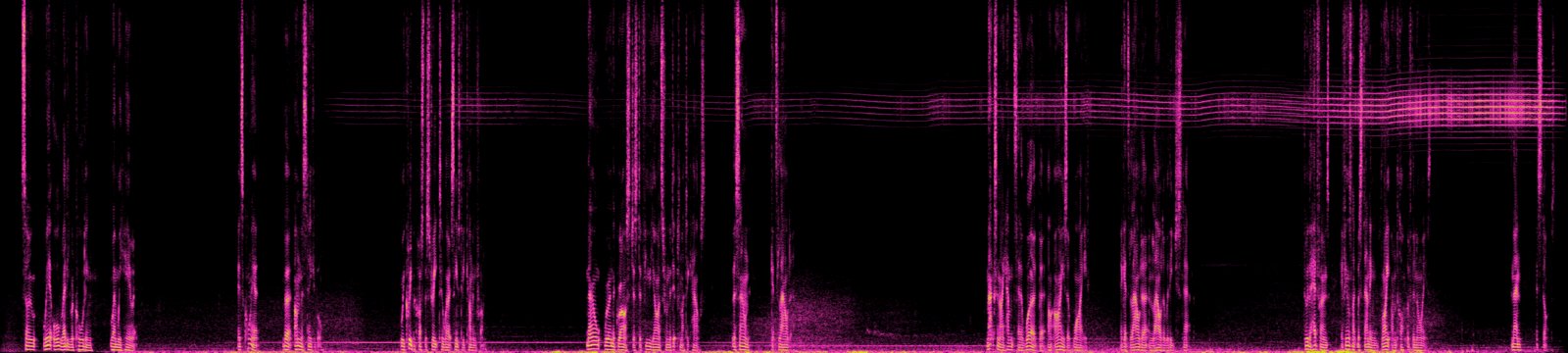 The sound beginsIt stops
The Sound: Mystery of Havana Syndrome is an eight-part investigative podcast from Brazen, hosted by journalist Nicky Woolf and released between January and March 2023, that tests every main explanation for the illness first reported by US diplomats and spies in Cuba in 2016. Woolf's conclusion, in the final episode, is that some kind of device was probably used in some cases, that psychological spread explains part of the wider outbreak, and that the evidence for an attacker is still circumstantial.
The story
At the end of 2016, people working at the newly reopened US embassy in Havana began to fall ill. Several described hearing something first: a high, piercing, sometimes mechanical sound that seemed to follow them into one room and stop when they stepped out of it. Then came headaches, dizziness, nausea, trouble with memory and vision. Some were flown to Miami, where doctors found signs consistent with brain injury. By September 2017 the United States had pulled most of its embassy staff out of Cuba.
The story spread. Canadian diplomats in Havana reported the same symptoms. So, over the following years, did officials in other countries; by the show's count, cases were eventually reported on every continent except Antarctica. The episodes became known as Havana Syndrome, and in government language as anomalous health incidents.
The Sound sets out to answer the obvious question: what happened? Woolf and Johnston interviewed diplomats who were in Havana, the doctors who treated them, Cuban officials and scientists, sceptics, weapons researchers and former intelligence officers. They tested each explanation in turn. A recording released in 2017 turned out to match a cricket. Mass psychogenic illness explained a lot of the later cases but not the earliest ones. Microwave energy fitted several reported features, and a physicist friend of Woolf's built a working directed-microwave device in Britain from off-the-shelf parts in a few weeks.
The series then looks at the long history of Soviet microwave beams aimed at the US embassy in Moscow, travels to Havana to stand where the first victims stood, and hears from John Bolton, Donald Trump's national security adviser, about how the administration handled it. In the last episode a retired FBI agent describes a radio-frequency attack he was told about overseas in 2011.
Woolf's verdict: something happened in Havana; a device was probably used in some cases; the proof is not there yet.
On the ground in Havana
Nicky Woolf, filmed in Cuba while reporting the series. Tap a clip for sound.The people, on camera
Interviews filmed in Havana for the series and, in 2025, for Whale Hunting. Tap a clip for sound.- Patrick Oppmann is CNN's Havana bureau chief, who had lived and reported in the city for years before the first cases.
- Raúl Rodríguez directs the Center for US and Hemispheric Studies at the University of Havana.
- James Giordano is the neuroscientist who advised the State Department's early investigation. He is now director of the Center for Disruptive Technology and Future Warfare at the National Defense University. Recorded in 2025; the views are his own and not those of the US government, the Department of Defense or the National Defense University.
The Mystery Begins
A five-minute film made for the series, on the Brazen YouTube channel.
Watch on YouTubeFilmed in Havana, December 2022
There is still no official explanation – but that makes the series no less compelling.
Episodes
 Introducing The Sound: Mystery of Havana Syndrome9 Jan 2023 3 min
In December 2016, a US official in Havana went to the embassy medical centre to report a debilitating and confounding illness. The symptoms included headaches; nausea; hearing loss; problems with memory and vision – and its onset was characterized by hearing… something. A buzzing, hissing, grinding… sound. Soon, a sec…
 Meeting Nicky Woolf: Answering the Global Mystery of Havana Syndrome13 Jan 2023 7 min
What is Havana Syndrome? Nicky Woolf speaks with Project Brazen co-founder Tom Wright about his upcoming investigative podcast, THE SOUND: Mystery of Havana Syndrome. Nicky shares his experience following the unexplained phenomenon from Havana to Washington DC, Miami, London, and beyond. He talks about meeting victims…
 Episode 1: Jericho23 Jan 2023 31 min
There’s a mysterious outbreak of neurological problems among American spies and diplomats in Cuba. Host Nicky Woolf documents the first cases with never before heard accounts from Havana, while parsing through classified intelligence to learn how this mystery began. The Sound is a Project Brazen production. Subscribe…
 Episode 2: The Immaculate Concussion30 Jan 2023 35 min
Havana Syndrome cases are spreading. Investigators flock to Cuba while politicians start hunting for a culprit. Host Nicky Woolf breaks down the early investigations by the US and Cuban governments while our own search ramps up. Meanwhile, a political narrative starts to take shape. The Sound is a Project Brazen produ…
 Episode 3: Speak of the Devil6 Feb 2023 38 min
When recordings of a strange sound in Havana go public, some wonder if these “Havana Syndrome” health problems are real or imagined. We take a critical look through the research – and enlist the help of a mentalist – to try to answer the question: is this whole thing in our heads? The Sound is a Project Brazen product…
 Episode 4: The Frey Effect13 Feb 2023 36 min
The Havana Syndrome story is bigger than Cuba now. Cases are being reported on nearly every continent, so some investigators propose a new, strange theory. We wade into the science to see if Havana Syndrome is just the latest in a long pattern of attacks using microwave energy. The Sound is a Project Brazen production…
 Episode 5: The Great British Nuke Off20 Feb 2023 34 min
Nicky heads to the UK to build a microwave device that could be the key to the mystery of Havana Syndrome. And we take a deep-dive into the American military industrial complex to see what the future of warfare and weaponry looks like. Is Havana Syndrome just the beginning of something much scarier? The Sound is a Pro…
 Episode 6: A Silent Injury27 Feb 2023 35 min
A CIA officer in Moscow gets sick, and his story fundamentally changes the narrative surrounding “Havana Syndrome.” We hear first-hand accounts of Soviet radiation that go back decades, and learn that the Cold War may have never really ended. The Sound is a Project Brazen production. Subscribe to Brazen+ on Apple Podc…
 Bonus: Fresh Doubts out of Washington1 Mar 2023 14 min
While we were crafting our last few episodes, some big news dropped. A new report from the CIA and other intel agencies found that no foreign actor, attack or technology could be behind the Anomalous Health Incidents, aka Havana Syndrome. Co-creators Nicky Woolf and Max Johnston sift through the noise to find out what…
 Episode 7: The Two Exits6 Mar 2023 33 min
Host Nicky Woolf goes to the scenes of the alleged crime in Cuba where we find “the sound” and see the human impact of the Havana Syndrome story. The US Embassy has reopened just as Cubans leave the island en masse. The Sound is a Project Brazen production. Subscribe to Brazen+ on Apple Podcasts and get exclusive bonu…
 Episode 8: Hammers and Nails13 Mar 2023 40 min
We answer our central question: What happened here? And we try to chart the path forward for “Havana Syndrome” victims. The Sound is a Project Brazen production. Subscribe to Brazen+ on Apple Podcasts and get exclusive bonus episodes for The Sound and all our shows, as well as ad-free listening and early access to new…
 Bonus: Live from the International Spy Museum11 Apr 2023 54 min
This week’s episode comes in collaboration with SpyCast, a podcast featuring in-depth conversations from the world of global intelligence and espionage. In this bonus, you’ll get to listen in on a panel discussion recorded live at the International Spy Museum in Washington, DC. The discussion was moderated by Dr. Andr…
 Bonus: The Music Behind The Sound with Attacca Quartet24 Apr 2023 31 min
A behind-the-scenes conversation with Attacca Quartet, the Grammy Award-winning group that composed and performed the haunting string melodies in THE SOUND: Mystery of Havana Syndrome. Lead producer Max Johnson and audio engineer Rebecca Seidel speak with three members of Attacca Quartet—violinist Domenic Salerni, vio…
Episode by episode
Lengths are from the show's feed. Each chapter has an episode page on brazen.fm.
Trailer. Introducing The Sound: Mystery of Havana Syndrome. 9 January 2023, 3 minutes. Sets up the mystery: a US official in Havana reports an illness that began with hearing a sound, and then a second, third and fourth official fall ill. (Summary from the feed description.)
Meeting Nicky Woolf: Answering the Global Mystery of Havana Syndrome. 13 January 2023, 7 minutes. Brazen co-founder Tom Wright talks to Woolf about following the story from Havana to Washington, Miami and London, meeting victims and building his own device. (Summary from the feed description.)
Chapter 1. Jericho. 23 January 2023, 31 minutes. The first cases at the US embassy in Havana, told by diplomat Kevin Coats, whose wife Karen fell ill after hearing a high-pitched sound in 2017. Dr Michael Hoffer of the University of Miami describes leading the first medical investigation. The episode follows the story from secret embassy briefings to its public breaking in August 2017 and the withdrawal of embassy staff that September.
Chapter 2. The Immaculate Concussion. 30 January 2023, 35 minutes. Doug and Kate Ferguson, among the first patients evacuated to Miami, describe the sound at their home and the brain injury diagnosis that followed. Neuroscientist James Giordano explains what investigators tested and ruled out, the episode shows why a commercial sonic device would have been heard across the whole neighbourhood, and Cuban officials Johana Tablada and Mitchell Valdés-Sosa give Havana's side. Canadian diplomats' cases, and the lawsuit some of their families brought, show the story spreading.
Chapter 3. Speak of the Devil. 6 February 2023, 38 minutes. The recording released in 2017 was identified by entomologists as the mating call of a Caribbean cricket. Robert Bartholomew, who studies mass psychogenic illness, and neurologist Bob Baloh make the case for mass psychogenic illness, mentalist Matt Cooper demonstrates the power of suggestion, and a data analyst explains criticism of the 2018 brain-scan study. Woolf finds the theory strong for many later cases but signals problems with it.
Chapter 4. The Frey Effect. 13 February 2023, 36 minutes. Physician Beatrice Golomb's theory that pulsed radio-frequency energy caused the injuries, and the Frey effect, in which such energy is heard as sound. Linda Birnbaum and David Relman explain why the National Academies committee they sat on found that idea plausible and the psychogenic explanation a poor fit for the earliest cases. Former officials Frank Figliuzzi and Charles Kupperman, and the victims themselves, describe how the government handled the response.
Chapter 5. The Great British Nuke Off. 20 February 2023, 34 minutes. Woolf and physicist Kyle Major build a small directed-microwave transmitter in Britain from off-the-shelf parts. It measurably beams energy before its magnetron burns out. The episode then looks at military directed-energy programmes, and Giordano says he came to believe such technology had become usable by 2018 or early 2019.
Chapter 6. A Silent Injury. 27 February 2023, 35 minutes. The Soviet bug hidden in the Great Seal and the microwave beams aimed at the US embassy in Moscow from the early 1960s, told partly by retired diplomat James Schumaker. Former CIA officer Marc Polymeropoulos describes falling ill on a trip to Moscow in December 2017 and fighting for treatment. Woolf weighs the case against Russia, calls it circumstantial, and the team arrives in Havana.
Bonus. Fresh Doubts out of Washington. 1 March 2023, 14 minutes. Recorded the day a US intelligence assessment found that a foreign adversary was very unlikely to be responsible. Woolf and Johnston discuss what it said. (Summary from the feed description.)
Chapter 7. The Two Exits. 6 March 2023, 33 minutes. The team reports from Havana, is held for two hours by Cuban officials after recording near the US embassy, and hears a loud, directional sound in Miramar, the district where many diplomats live, that resembles the 2017 recordings. A local producer says it is just a cricket. Tablada and University of Havana scholar Raúl Rodríguez argue that the affair was used to reverse the Obama-era opening, and Cubans queuing for US visas describe what the rift cost them.
Chapter 8. Hammers and Nails. 13 March 2023, 40 minutes. The verdict episode. John Bolton tells the show that the attacks played no part in his advice to put Cuba back on the list of state sponsors of terrorism, and that he did not raise a possible Russian role with President Trump because he did not expect Trump's support. Retired FBI agent Ken Jones, in his first public account, describes being told in 2011 that a foreign actor was attacking an embassy link with radio waves, and the migraines that followed. Woolf sets out where he lands.
Bonus. Live from the International Spy Museum. 11 April 2023, 54 minutes. A panel recorded with SpyCast in Washington, moderated by historian Andrew Hammond, with Woolf, former CIA officer Marc Polymeropoulos and attorney Mark Zaid, on personal experience, the government's response and what victims need. (Summary from the feed description.)
Bonus. The Music Behind The Sound with Attacca Quartet. 24 April 2023, 31 minutes. Max Johnston and audio engineer Rebecca Seidel talk to Domenic Salerni, Nathan Schram and Andrew Yee of the Attacca Quartet about writing and recording the score. (Summary from the feed description.)
The people
Roles are as described in the episodes.
| Person | Who they are | Where |
|---|---|---|
| Nicky Woolf | Host, reporter and writer | All |
| Max Johnston | Lead producer and reporter | All |
| Kevin and Karen Coats | US diplomat and his wife, a State Department employee, in Havana | 1, 4, 7, 8 |
| Doug and Kate Ferguson | US embassy IT manager and his wife, among the first evacuated | 2, 3, 4, 7, 8 |
| Michael Hoffer | University of Miami doctor who led the first medical investigation | 1 |
| Patrick Oppmann | CNN's Havana bureau chief | 1, 7 |
| James Giordano | Georgetown neuroscientist who advised the State Department's early investigation | 2, 5, 8 |
| Johana Tablada | Cuban Foreign Ministry official responsible for the United States | 2, 7 |
| Mitchell Valdés-Sosa | Director of the Cuban Neuroscience Center, head of Cuba's investigation | 2 |
| John Phillips | Toronto lawyer for Canadian diplomats posted to Havana | 2 |
| Robert Bartholomew | Researcher and author on mass psychogenic illness, University of Auckland | 3, 8 |
| Bob Baloh | Emeritus professor of neurology, UCLA | 3, 8 |
| Matt Cooper | Mentalist | 3 |
| Beatrice Golomb | Professor of medicine, UC San Diego | 4, 5 |
| Linda Birnbaum | Former director, National Institute of Environmental Health Sciences; National Academies committee member | 4 |
| David Relman | Stanford professor, chair of the National Academies committee | 4, 8 |
| Frank Figliuzzi | Former FBI assistant director for counterintelligence | 4 |
| Charles Kupperman | Former deputy national security adviser | 4 |
| Kyle Major | Physicist who built the test device | 5 |
| James Schumaker | Retired foreign service officer, served in Moscow | 6, 8 |
| Marc Polymeropoulos | Former CIA operations officer | 6, 8, Spy Museum bonus |
| Peter Kornbluh | Journalist at the National Security Archive who published declassified Moscow Signal documents in 2022 | 6 |
| Raúl Rodríguez | University of Havana, Center for US and Hemispheric Studies | 7, 8 |
| John Bolton | National security adviser to President Trump, 2018–19 | 8 |
| Ken Jones | Retired FBI agent | 8 |
Timeline
Dates up to March 2023 are as reported in the series unless a link says otherwise.
- 1945–52. A carved Great Seal given to the US ambassador in Moscow is found to contain a passive Soviet listening device (chapter 6).
- 1960. Biologist Allan Frey begins the research that describes hearing pulsed radio-frequency energy as sound (chapter 4).
- 1962 onwards. Microwave beams aimed at the US embassy in Moscow are identified; they continue for decades (chapter 6).
- 2011. Retired FBI agent Ken Jones says he was told of a radio-frequency attack on an embassy communications link where he was posted (chapter 8).
- 2015. The Obama administration restores diplomatic relations with Cuba (chapter 1).
- Late 2016. The first people at the US embassy in Havana fall ill (chapter 1).
- February 2017. The US raises the incidents with the Cuban government (chapter 2).
- March 2017. Doug Ferguson records the sound on his phone in his back garden (chapter 3).
- August 2017. The cases become public; the Associated Press releases a recording (chapters 1 and 3).
- September 2017. The US orders non-essential embassy staff out of Havana (chapter 1).
- December 2017. Marc Polymeropoulos falls ill on a trip to Moscow (chapter 6).
- 2018. A JASON scientific advisory study concludes the released recordings were most likely of a cricket (JASON report); a JAMA brain-scan study of 21 patients is published and criticised (chapter 3).
- December 2020. A National Academies committee finds directed, pulsed radio-frequency energy the most plausible mechanism for the distinctive early cases (National Academies).
- December 2022. The Sound's team reports from Havana (chapter 7; month from Brazen's footage).
- 23 January–13 March 2023. The eight chapters are released.
- 1 March 2023. A US intelligence community assessment finds it very unlikely that a foreign adversary caused the incidents (bonus episode).
- 13 March 2023. Chapter 8 airs with John Bolton's account of the Trump administration's response; The Guardian reports his account the same day.
What has happened since
This section is outside the show. The Sound has not been updated since 2023. For a maintained account of the evidence, see the Whale Hunting guide, Havana Syndrome: the reporting, science and unanswered questions.
- 18 March 2024. NIH studies of more than 80 affected employees and family members find no significant evidence of MRI-detectable brain injury compared with controls (NIH).
- 31 March 2024. 60 Minutes, The Insider and Der Spiegel report evidence pointing to Russia's GRU military intelligence unit 29155 (CBS News). The Kremlin rejects it (Reuters).
- September 2024. NIH halts its study after finding informed-consent requirements were not met because of coercion, which it says did not involve its researchers (MedPage Today).
- 5 December 2024. A House Intelligence subcommittee interim report says it is increasingly likely that a foreign adversary is responsible for some incidents (House Intelligence Committee).
- 10 January 2025. An updated intelligence assessment keeps the view that a foreign actor was very unlikely to be responsible, with five agencies at "very unlikely", one at "unlikely" and one abstaining (ODNI).
- 13 January 2026. CNN reports that the Defense Department has spent more than a year testing a backpack-sized device producing pulsed radio waves, bought in an undercover operation and containing Russian components; its link to the incidents remains unproven (CNN).
- 14 February 2026. Reuters, following The Washington Post, reports that a Norwegian government scientist tested a microwave device and developed neurological symptoms similar to Havana Syndrome (Reuters).
- 8 March 2026. 60 Minutes reports the device was bought from a Russian criminal network in 2024 and tested on animals, with injuries consistent with human cases (CBS News).
- 11–12 June 2026. Director of National Intelligence Tulsi Gabbard recalls the 2023 and 2025 assessments (House Intelligence Committee; CNN).
- 10 July 2026. The Pentagon renames its response team the Directed Energy Bio-Effects Cross-Functional Team and reports nearly $3 million in the first HAVANA Act compensation payments (US Department of War; BBC).
- 13 October 2026. Crown publishes The Havana Syndrome by Michael Rey and Oriana Zill de Granados, which presents evidence implicating a Russian unit (Penguin Random House).
- 27 October 2026. The Justice Department publishes a final rule implementing the HAVANA Act of 2021 (Federal Register).
This review found no US government finding that publicly names a perpetrator, as of 12 November 2026.
Questions
What is Havana Syndrome?
It is the popular name for a set of sudden symptoms, including headaches, dizziness, nausea, hearing loss and problems with memory and vision, first reported by US embassy staff in Havana in late 2016. Many people said the symptoms began with a sound. US agencies call the episodes anomalous health incidents.
What does the Havana Syndrome sound like?
People described a high, piercing, buzzing or grinding sound. The phone recording released in 2017 was identified as the call of a cricket, and in Havana the show's team heard a similar loud, directional sound that a local producer said was an ordinary cricket. The series argues that an insect cannot cause brain injury, and Woolf calls the cricket "a hugely unfortunate coincidence" that fed the psychological explanation without accounting for the injuries.
Is Havana Syndrome real?
The symptoms are real to the people who have them, and for some of the people in the series they have lasted years. What is disputed is the cause. The series concludes that psychological spread explains part of the outbreak but not the earliest cases. Since the show, NIH studies found no MRI-detectable brain injury, while congressional investigators and later reporting have pointed to a foreign weapon (see "What has happened since").
What did The Sound conclude?
In chapter 8, Woolf says: "I do think some kind of device was used in some cases. I think something happened in Havana." He adds that much of the evidence is circumstantial, that some psychogenic spread was inevitable once the illness had a name, and that even if every case were stress-related, the agencies responsible had failed the people in their care.
Did Russia do it?
The series treats Russia as the leading suspect if there was an attack, because of the Soviet record of beaming microwaves at the US embassy in Moscow, but calls the evidence against it circumstantial. Since the show, a 2024 investigation by 60 Minutes, The Insider and Der Spiegel pointed to a GRU unit, and the Kremlin denied it. This review found no formal government attribution.
What did John Bolton tell the podcast?
Bolton told the show that the attacks did not factor into his advice to return Cuba to the state sponsors of terrorism list. He also said that because his concern was that Russia might be the perpetrator, "we didn't feel we would get support from President Trump if we said, 'We think the Russians are coming after American personnel.'"
Could a microwave weapon cause these symptoms?
The National Academies committee in 2020 called directed, pulsed radio-frequency energy the most plausible mechanism for the early cases. In chapter 5, the show built a small directed-microwave transmitter from off-the-shelf parts in a few weeks. It beamed energy but did not prove that such a device caused any injury.
Has Havana Syndrome been solved?
No. As of November 2026 the intelligence assessments that doubted a foreign cause have been recalled, the US has tested a device it bought from a Russian network, and the first compensation has been paid, but this review found no official naming of a perpetrator.
How many episodes are there, and where should I start?
Eight chapters, about four hours and forty minutes in total, plus a trailer and four extras. Start with chapter 1, "Jericho". The series is told in order and is best heard that way.
How is this page different from Whale Hunting's Havana Syndrome coverage?
This page covers the podcast: what it is, each episode, who is in it and what it found. Brazen's newsletter Whale Hunting keeps the maintained, sourced account of the official record and the reporting since 2023.
About the show
- Host and writer: Nicky Woolf, journalist.
- Lead producer and reporter: Max Johnston.
- Made by: Project Brazen and Goat Rodeo, in partnership with PRX (Whale Hunting; Boing Boing, March 2023).
- Released: eight chapters, weekly from 23 January to 13 March 2023, with a trailer, an introductory conversation and three bonus episodes. The eight chapters run about four hours and forty minutes in total.
- Music: an original string score by the Grammy-winning Attacca Quartet, who discuss it in the final bonus episode.
- Format: a narrative investigation built like a case at trial. Woolf takes each theory in turn and tries to knock it down. In his words to Gizmodo: "throughout the show, we go through each of these theories that have come out in a sort of Occam's Razor way—to try to test each one out."
- Reviews: "There is still no official explanation – but that makes the series no less compelling," wrote Rachel Cunliffe in the New Statesman. Apple Podcasts listeners rate it 4.5 out of 5 from 231 ratings (Apple Podcasts, read 12 November 2026).
Credits
The Sound is a production of Project Brazen in partnership with PRX, produced by Goat Rodeo. Reported and written by Nicky Woolf (host) and Max Johnston (lead producer). Executive producers for Project Brazen: Bradley Hope, Tom Wright and Nicholas Brennan. Senior producers for Goat Rodeo: Ian Enright and Megan Nadolski. Mixing and engineering: Rebecca Seidel. Additional production: Rebecca Seidel, Jonathan O’Sullivan, Emilio Polo and Javier Labrador. Producer in Havana: Boris Crespo. Original score: Attacca Quartet. Additional music: Max Johnston, Ian Enright, Rebecca Seidel and Blue Dot Sessions. Editorial and production assistance at Goat Rodeo: Isabelle Kerby-McGowan, Cara Shillenn, Jay Venables and Megan Nadolski; at Project Brazen: Mariangel Gonzales, Megan Dean, Susie Armitage, Francesca Gilardi Quadrio Curzio, Salber Lee, Lucy Woods, Siddhartha Mahanta and Neha Wadekar. Series creative director: Ryan Ho. Cover art: Julien Pradier. Series video production: Javier Labrador, Andrija Klaric, Giulia Franchi, Emily Chao and Nicholas Brennan. (Credits as read in the episodes; full list at soundistheweapon.com.)
Keep reading
Whale Hunting has kept reporting the story since the podcast ended.
- Havana Syndrome: the reporting, science and unanswered questions — the maintained guide
- The Mystery of Havana Syndrome — 23 January 2023
- Unraveling Havana Syndrome — 2 July 2025
- The Immaculate Concussions — 27 August 2025
- Havana Syndrome: Only Two Nations on Earth — 4 November 2025
- Havana Syndrome: The Cover-Up — 18 December 2025
- Havana Syndrome is Back — 14 January 2026
Last reviewed 12 November 2026.